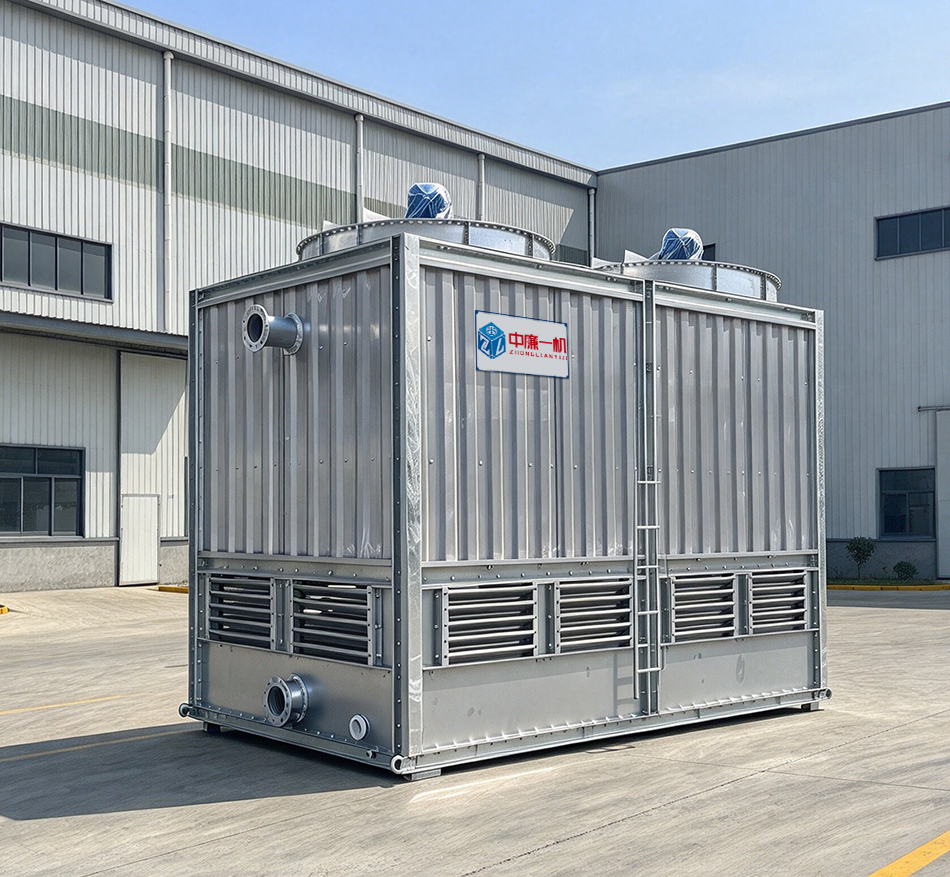
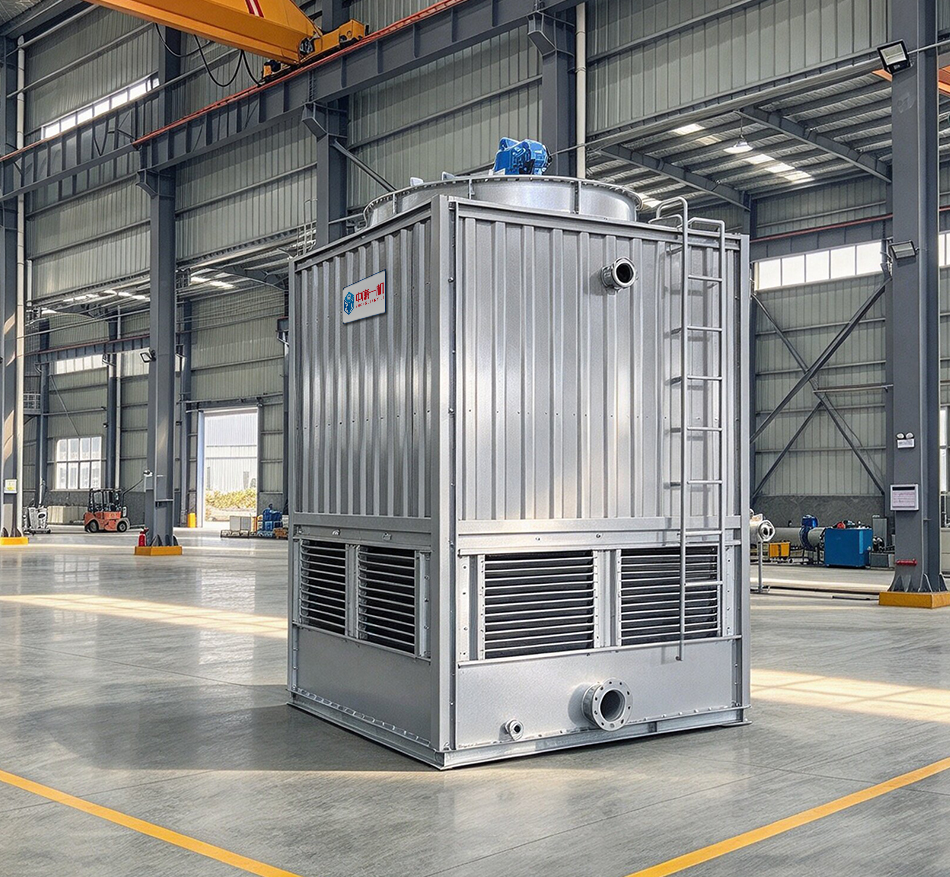
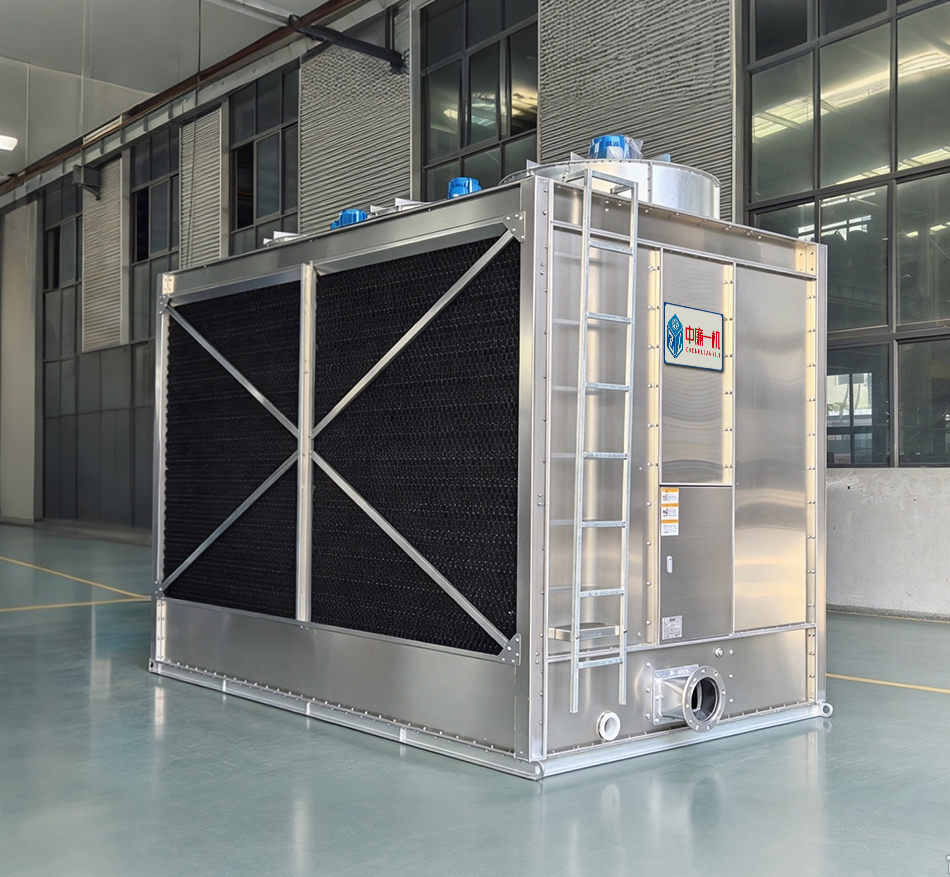
在工业厂房、商业综合体乃至数据中心的屋顶,冷却塔堪称保障设备稳定运行的“散热卫士”。但你是否了解,冷却塔的离地高度,对其工作效率、使用寿命甚至建筑安全都有着直接影响?今天我们就来探讨,屋顶冷却塔究竟该抬多高?
一、冷却塔抬高的必要性
冷却塔依靠空气与冷却水的热交换完成散热工作。如果底部离屋顶过近,屋顶表面的湍流气流会干扰空气吸入,造成进风不均,散热效率最高可能降低20%;同时,排出的湿热空气还可能因屋顶反射被重新吸入,形成“空气短路”,导致冷却塔能耗大幅上升。此外,抬高冷却塔还能避免暴雨积水倒灌,同时为设备检修预留操作空间,保障运维安全。
二、抬高高度的确定依据
1. 行业规范要求
l 国内标准:《建筑给水排水设计标准》(GB50015-2019)明确规定,冷却塔底部距屋顶面高度不得小于0.5米,多台并排安装时,相邻塔体间距应≥1.5米。
l 国际参考:美国冷却技术研究所(CTI)推荐,进风口下缘距支撑面高度≥0.6米;若屋顶存在障碍物,进风口与障碍物的水平距离需≥2倍塔体高度。
2. 实际场景适配
场景类型 | 影响因素 | 推荐高度 |
民用建筑 | Noise敏感,设备中小型 | 常规0.5-0.8米;临近居民区时抬高至1-1.5米,加装隔音垫 |
工业建筑 | 设备大型,多塔并联 | 混凝土基础抬高1-2米,塔间距≥塔体直径,底部抬高≥1米 |
特殊场景 | 斜坡屋顶、腐蚀性环境 | 斜坡屋顶最低点抬高≥0.8米;化工厂屋顶抬高1-1.5米,基础做防腐处理 |
三、不同抬高方式的选择
1. 混凝土条形基础:适合中小型冷却塔,施工简单、成本低,可抬高0.5-1米。基础宽度需≥塔体底部边长+0.2米,采用C30混凝土,厚度≥200mm,能稳固支撑设备。
2. 钢支架基础:大型冷却塔或需抬高>1米时的首选。用H型钢或角钢焊接支架,表面热镀锌防腐,支架间距≤2米,抗风抗震性能优异。
3. 组合式基础:当需要抬高1.5-2米时,可采用“混凝土基础(0.5米)+钢支架(1-1.5米)”的组合,兼顾稳定性与经济性。
四、不抬高的潜在风险
小型临时设备或镂空格栅屋顶的冷却塔可暂不抬高,但需警惕后续问题:某办公楼未抬高冷却塔,半年后冷却水温升高3℃,年耗电量增加1.2万度;还有工厂因积水倒灌导致Water PumpMotor烧毁,维修费用高达5000元。看似省下的安装费,最终会以更高的运维成本体现。
五、科学设计流程
1. 收集数据:明确冷却塔Model、屋顶承重、当地气候及Noise要求。
2. 初步计算:按规范确定最小高度,结合环境修正(如台风区需额外加高1米)。
3. 模拟验证:大型项目或复杂屋顶,用CFD软件模拟气流,确保进风口风速均匀性≥85%。
如果您有冷却塔安装或改造需求,欢迎随时咨询,我们的专业团队可为您提供定制化方案。
Written by: Zhongliang Yiji Technical Department · 15 Years of Cooling Tower Selection Experience | Last Updated:2026-10-17
FAQ
How to choose between a closed-circuit and an open cooling tower?
For working conditions that demand clean water (such as vacuum furnaces, high-frequency furnaces, and injection machine hydraulic oil cooling), a closed-circuit tower is preferred: the cooled medium circulates inside the coil without direct contact with air, so it resists scaling, algae and particle contamination, with stable heat transfer and low maintenance. For ordinary recirculating water scenarios with tight water budgets or cost sensitivity, an open tower costs less upfront but requires supporting water treatment.
What are the footprint and connections of a 100 t closed-circuit cooling tower?
Taking a standard 100 m3/h closed-circuit tower as an example: overall dimensions are approximately 3500 x 1500 x 2800 mm with a footprint of about 5.25 m2; inlet and outlet piping is typically DN100, with a 5-10 C temperature drop under standard conditions. Refer to the product specification table for details; non-standard dimensions can be customised on site.
How do I size the pump and head for a cooling tower?
Pump flow is selected according to the rated circulating water volume of the cooling tower; head must account for pipeline friction losses, local resistance, equipment elevation difference and the necessary margin. Pressure-bearing equipment such as injection machines also requires reserve for the working pressure. It is recommended to hand the operating data (flow, temperature difference, installation height, pipe diameter and length) to technical staff for calculation, to avoid an undersized pump or excessive head that wastes energy.
What water treatment does a closed-circuit cooling tower need?
The outer circulating water of a closed-circuit tower still contacts air, so softened make-up water, periodic corrosion and scale inhibitor dosing, and control of the concentration ratio are recommended. The inner circulating medium should be softened water, antifreeze or pure water according to process requirements; outdoor installation in winter requires freeze protection (electric tracing or draining).