Written by: Zhongliang Yiji Technical Department · 15 Years of Cooling Tower Selection Experience | Last Updated:2026-10-17
FAQ
How to choose between a closed-circuit and an open cooling tower?
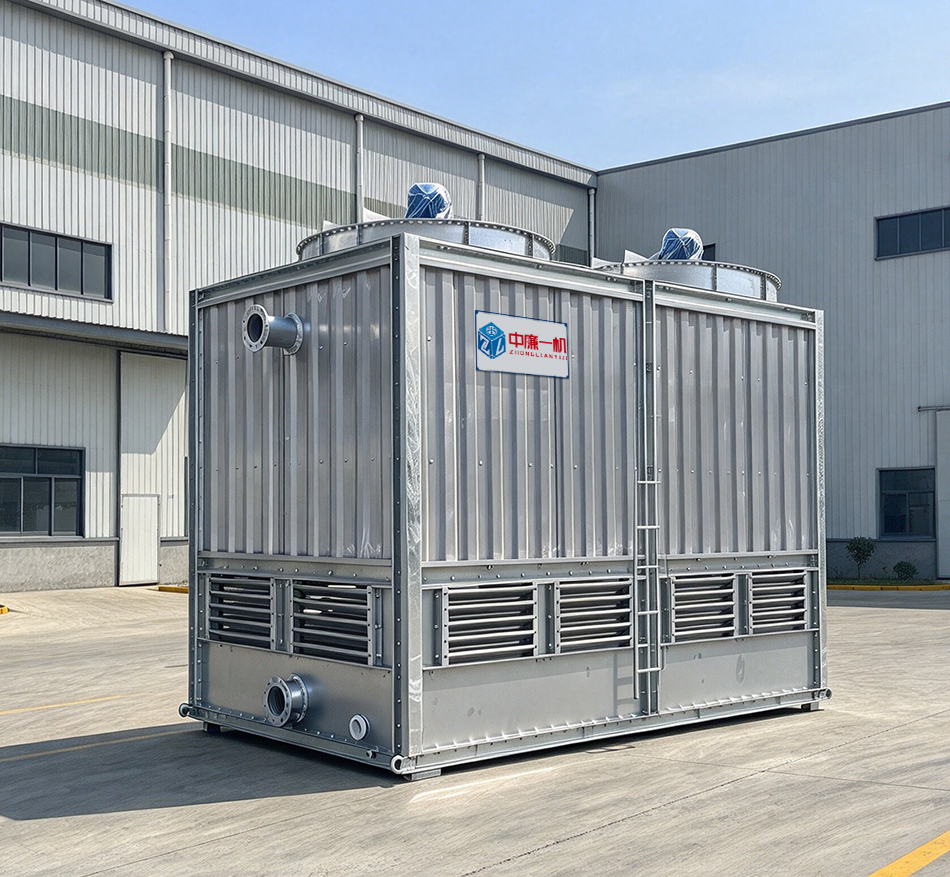
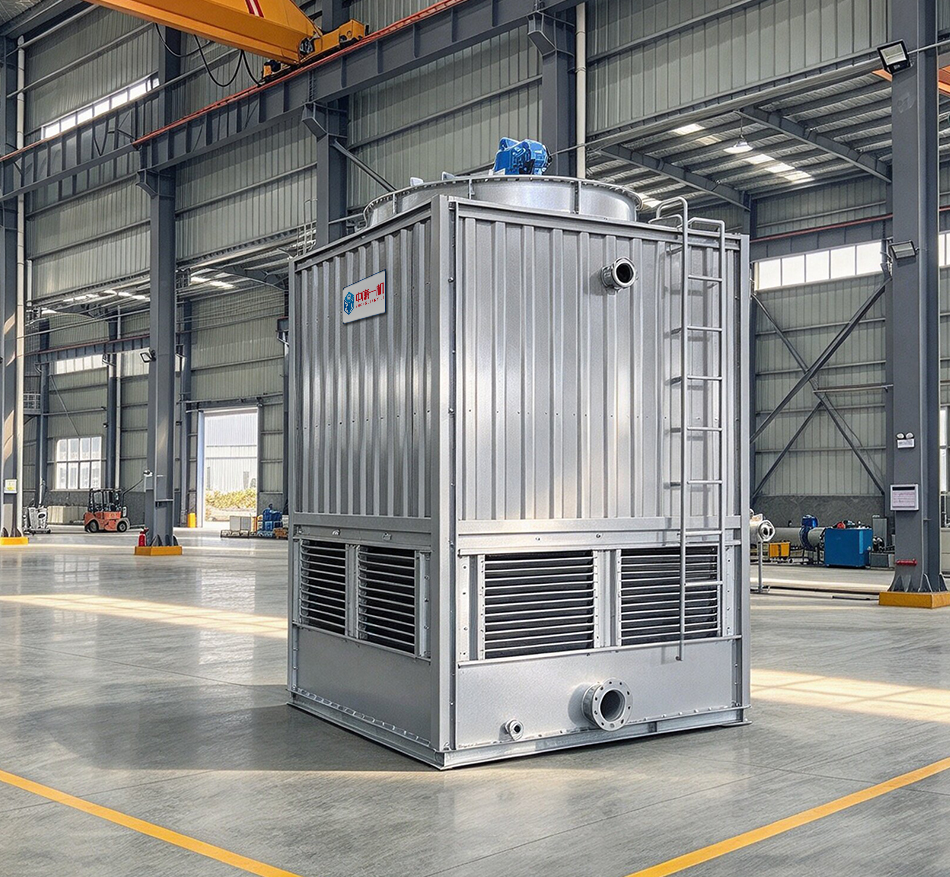
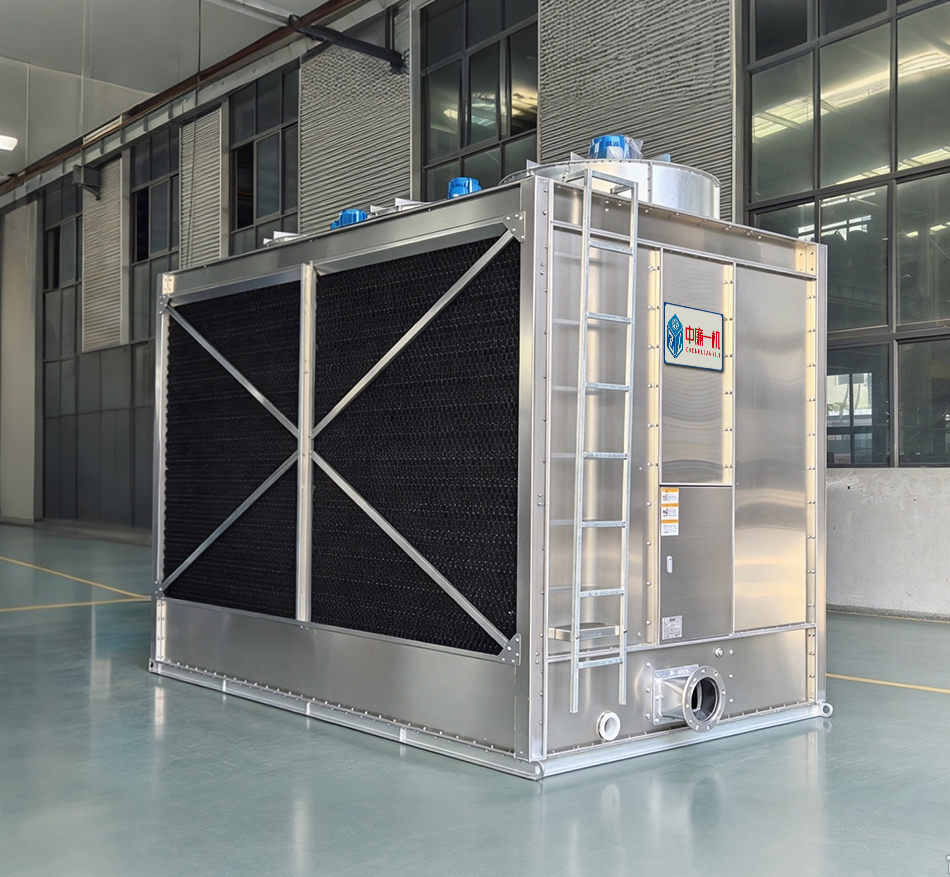
For working conditions that demand clean water (such as vacuum furnaces, high-frequency furnaces, and injection machine hydraulic oil cooling), a closed-circuit tower is preferred: the cooled medium circulates inside the coil without direct contact with air, so it resists scaling, algae and particle contamination, with stable heat transfer and low maintenance. For ordinary recirculating water scenarios with tight water budgets or cost sensitivity, an open tower costs less upfront but requires supporting water treatment.
What are the footprint and connections of a 100 t closed-circuit cooling tower?
Taking a standard 100 m3/h closed-circuit tower as an example: overall dimensions are approximately 3500 x 1500 x 2800 mm with a footprint of about 5.25 m2; inlet and outlet piping is typically DN100, with a 5-10 C temperature drop under standard conditions. Refer to the product specification table for details; non-standard dimensions can be customised on site.
How do I size the pump and head for a cooling tower?
Pump flow is selected according to the rated circulating water volume of the cooling tower; head must account for pipeline friction losses, local resistance, equipment elevation difference and the necessary margin. Pressure-bearing equipment such as injection machines also requires reserve for the working pressure. It is recommended to hand the operating data (flow, temperature difference, installation height, pipe diameter and length) to technical staff for calculation, to avoid an undersized pump or excessive head that wastes energy.
What water treatment does a closed-circuit cooling tower need?
The outer circulating water of a closed-circuit tower still contacts air, so softened make-up water, periodic corrosion and scale inhibitor dosing, and control of the concentration ratio are recommended. The inner circulating medium should be softened water, antifreeze or pure water according to process requirements; outdoor installation in winter requires freeze protection (electric tracing or draining).